Can Meetings Menus Go Vegetarian?
Maybe not for every meal, but approaching F&B with a plant-forward mindset can help energize participants and save money.
Tracy originally wrote this for Northstar Meetings Group, published January 26, 2026.
After a recent convention, I scrolled through the food photos on my phone and realized something unsettling: Across multiple functions, vegetables appeared mostly as afterthoughts — crudité trays, cups of cut fruit, or a few scattered leaves of kale or arugula tucked under something else. When vegetables did show up on charcuterie boards, they were crowded out by pork and cured meats.
Many of the items labeled “vegetarian” relied heavily on soy or alternative meat products, as well as pasta. And while those options serve an important role for some guests, they aren’t the same as offering vegetables that stand on their own.
At the same time, I kept hearing a familiar refrain from attendees: “I want more protein.” And I get it. Protein is everywhere right now — on menus, in marketing and in wellness conversations. But somewhere along the way, vegetables stopped being treated as essential and instead became garnish or backup.

Starting a Vegetarian Revolution
According to a 2024 survey from the International Food Information Council, the top motivation for how people eat today is feeling better and having more energy. More than half of those who follow vegan, vegetarian or plant-based eating patterns do so for health reasons, and at least one in three simply because they enjoy the food.
And yet, when reviewing menus for an upcoming event, I can’t tell what’s vegan or vegetarian. Gluten-free and dairy-free items are labeled — but plant-forward options often require guesswork, assumptions or follow-up questions. And a kale and quinoa salad can come out with quinoa and a few shreds of kale. That creates friction for guests, extra work for planners, and sends an unintentional message about what’s being prioritized.
Vegetarian menus can work — at scale
What makes this gap especially frustrating is that we already have proof of what’s possible.
At the Niagara Falls Convention Centre (on the Canadian side), chefs developed a low-carbon, plant-forward menu with clearly labeled vegetarian and vegan dishes — complete with carbon-footprint scores. Sustainability wasn’t abstract; it was visible, measurable and edible.
At the JW Marriott Austin in Texas, the culinary team has demonstrated how plant-forward menus can scale without sacrificing creativity or satisfaction. Recent offerings included eggplant rollatini with marinara, king oyster mushroom “scallops” with parsnip purée, and teriyaki tofu with cauliflower fried rice — vegetable-driven dishes that feel intentional and complete. When I spoke with executive banquet chef Khoa Pham, he shared that cooking plant-forward allows his team to serve wellness, intention and responsibility at scale. That philosophy carries through to desserts as well. Last April at an event I helped plan, we served Red Plate cookies, cupcakes and muffins, all certified gluten-free, without any of the top nine allergens, and they’re vegan.
And for PRI in Person 2024, a financial conference, the Metro Toronto Convention Centre executed a 100 percent vegetarian and vegan menu for more than 2,000 attendees. Plant-based food wasn’t an accommodation — it was a core sustainability strategy, delivered without negative attendee feedback.
What actually works on the plate
Across venues doing this well, certain dishes show up again and again — not because they’re labeled “vegetarian,” but because guests choose them.
Entrées: chickpea and sweet potato curry, baby eggplant and squash caponata, roasted seasonal vegetable green onion risotto, vegan lasagna rolls, and aged cheddar and jack cheese soft polenta with central Texas mushroom Bolognaise.
Salads and sides: quinoa citrus salads, seasonal roasted vegetables, baked plantains, marinated tomato and mozzarella salad, and Roma tomato gazpacho.
Hors d’oeuvres: crispy falafel, southern deviled egg with pimento cheese, wild mushroom arancini, crispy polenta, spring-whipped peas and mascarpone.
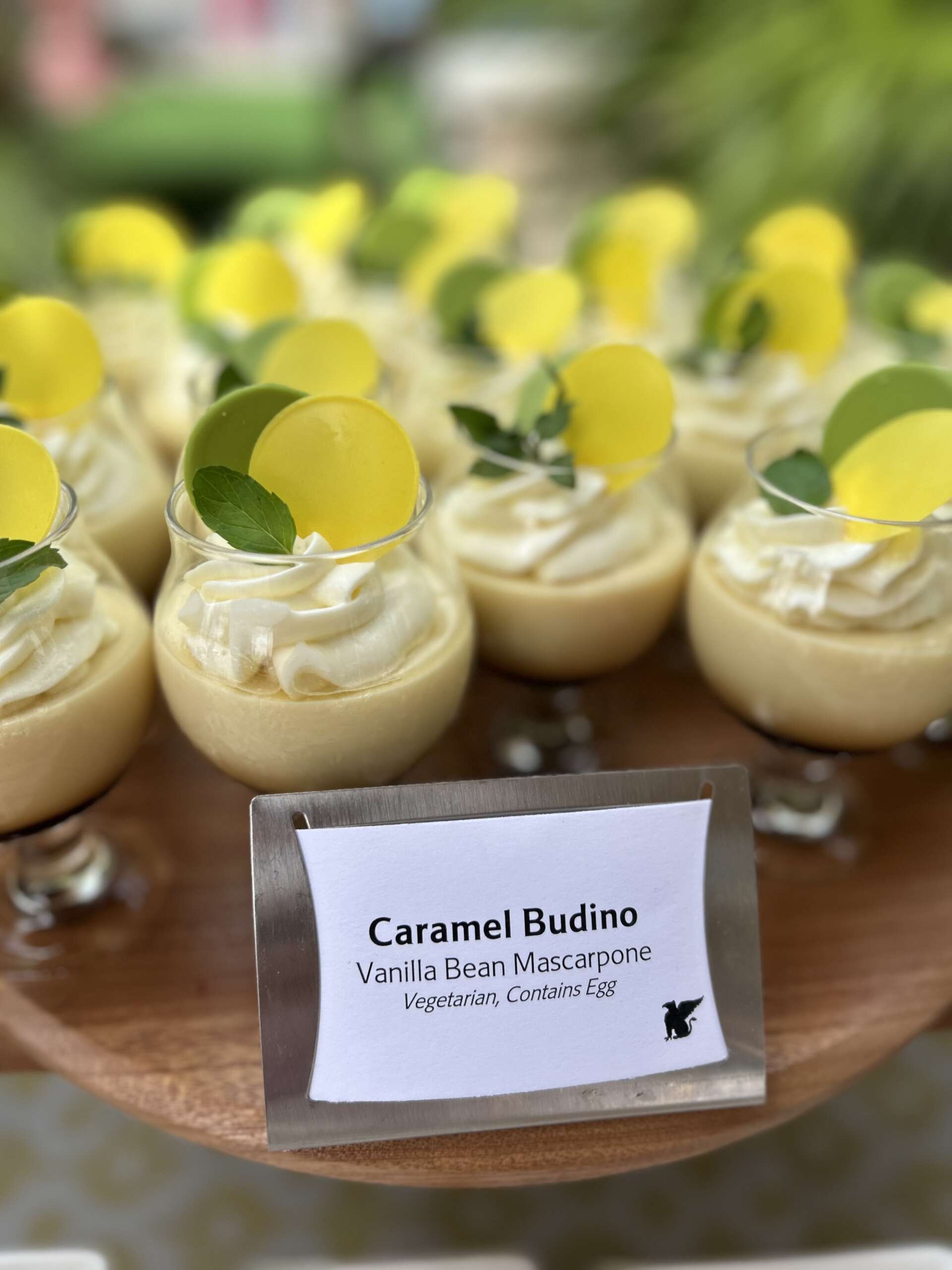
Desserts: vegan chocolate mousse, limoncello mascarpone cake, and fruit-forward options like baked pears or citrus tarts.
The common thread isn’t protein substitution. It’s flavor, familiarity and care in execution.
Industry trend reports reinforce this shift. The move away from highly processed meat substitutes toward whole vegetables — the “botanical centerpiece” — reflects what guests increasingly want to see and taste: roasted cauliflower instead of an Impossible burger, lion’s mane mushrooms instead of a plant-based patty.
There’s also growing interest in health-forward, functional foods — especially at corporate meetings. Fermented vegetables, fiber-rich greens, nutrient-dense bowls and lower-sugar desserts align with how guests want to feel throughout an event, not just how full they are.
How service design changes perception
Just as important as what is served is how it’s served.
Interactive stations, grazing displays and small plates create choice and perceived abundance. Street-food-inspired formats — vegetarian taco bars, plant-based shawarma, veggie sushi or breakfast-for-dinner spreads — invite curiosity instead of signaling restriction.
Passed bites matter, too. When guests enjoy vegetarian spring rolls, bruschetta or portobello mushroom sliders during a reception, they arrive at the meal already trusting what’s coming next.
What planners can do — starting now
This plant-forward philosophy isn’t about removing meat. It’s about redesigning the experience so vegetables and vegetarian dishes lead instead of apologize.
Planners can take action immediately by:
- Asking menus to include at least 20 percent plant-forward offerings;
- Requesting one plant-forward dish per meal period that doesn’t rely on alternative meats;
- Shifting vegetables from side status to center-plate thinking;
- Ensuring plant-forward items are not mixed or cross-served with non-plant-forward dishes; and
- Measuring success by guest satisfaction, not by how little meat is served.
When done well, plant-forward menus:
- Increase satisfaction across dietary preferences
- Reduce last-minute accommodations
- Support sustainability goals
- Feel modern, abundant and intentional
The takeaway is simple: Vegetarian food shouldn’t whisper from the corner of the menu. It should lead. When it does, guests leave energized, nourished and ready for what’s next.