
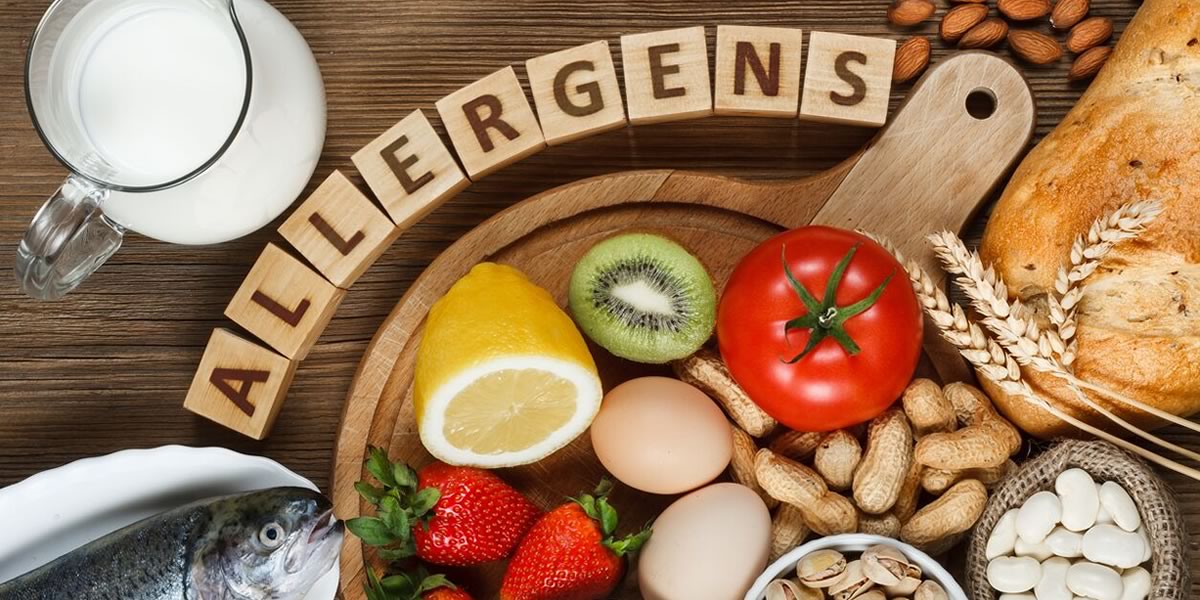
Understanding Food Allergies
Having a food allergy shouldn’t stop someone from enjoying life, including attending an event, eating in the company cafeteria or at a staff meeting. That’s why, as someone who orders, prepares and serves food to people, understanding food allergies can be beneficial to your company.
Our body’s immune system is designed to identify and destroy germs, such as bacteria or viruses, that make us sick. A food allergy results when the immune system mistakenly targets a harmless food protein (an allergen) as a threat and attacks it.
If someone is very sensitive to a certain allergen, eating even a tiny amount of a problem food can cause a reaction – from a mild response to anaphylaxis, a severe, sometimes even life-threatening, condition.
And, since there are no medicines that can prevent allergic reactions, we must learn how to take every precaution to avoid serving problem foods to those with food allergies. That means making changes in our day-to-day operations—educating staff, taking orders, preparing meals, serving plates.
All this may sound complicated and daunting, but it’s important to remember that increasing your awareness and ability to serve and respond to the needs of your guests, will allow you to:
- Increase positive communication with guests
- Maintaining customer-first focus
- Maintaining bottom line costs
In 2004 the U.S. Food and Drug Administration (FDA) amended the Federal Food, Drug, and Cosmetic Act (FD&C Act) with the Food Allergen Labeling and Consumer Protection Act (FALCPA) of 2004 to require that “the label of a food that contains an ingredient that is or contains protein from a ‘major food allergen’ declare the presence of the allergen in the manner described by the law.”
Effective as of January 2006, the purpose of FALCPA is to “improve food labeling information for the millions of consumers who suffer from food allergies.” It should allow individuals with food allergies will be able to recognize the presence of an ingredient that they must avoid. For example, if a product contains albumin (egg whites) the product’s label would have to use the term “egg” in addition to the term “albumin” so that those with egg allergies would clearly understand the presence of an allergen they need to avoid.
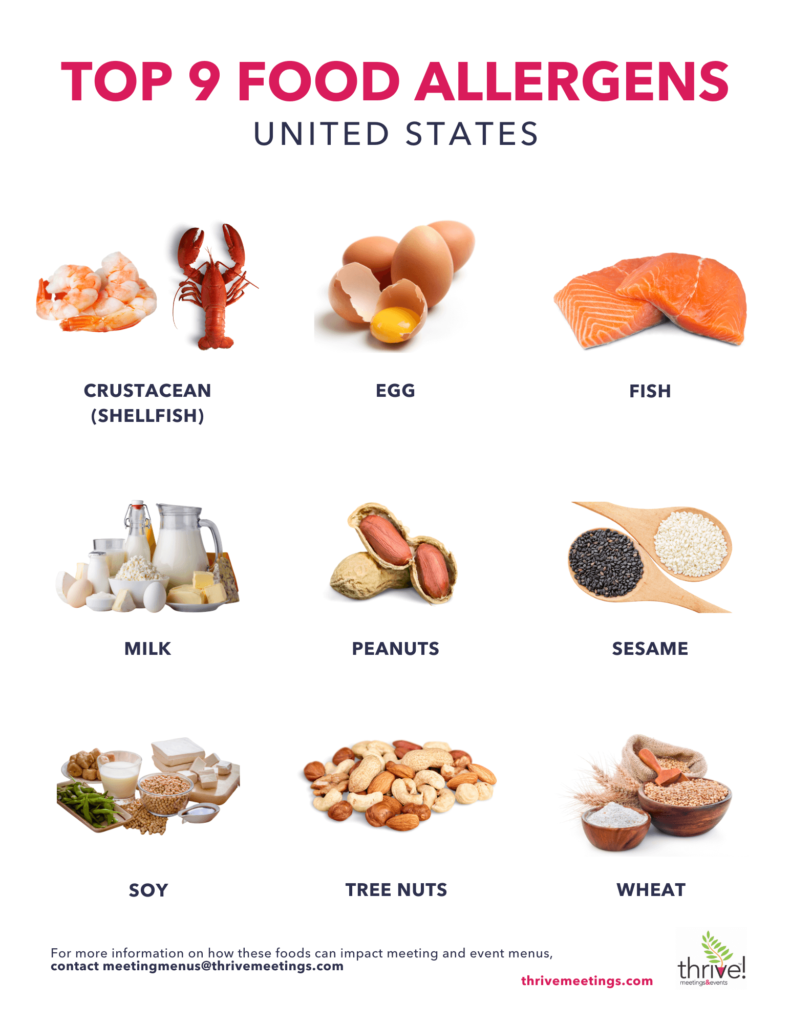
FALCPA identifies the following eight foods or food groups as the major food allergens:
In December 2014, the European Union enacted a new law (EU 1169) that requires all food — packaged and unpackaged — served directly to consumers (meeting attendees) be labeled with any of the 14 allergens as outlined in Annex II is may contain.
The law states that an “substances or products causing allergies or intolerances” in food served directly to consumers must be indicated in the list of ingredients with reference to the name of the substance or product (e.g. milk, egg) or emphasized through a typeset that distinguishes it from the rest of the list of ingredients. If no list of ingredients is provided—as usually done on event buffets or menus—the “substance or product causing allergies or intolerances must be indicated by means of ‘contains + [substance(s)/product(s)]’”.
If and when the name of the food clearly refers to the substance or product causing allergies or intolerances (e.g. scrambled eggs), it is not necessary to label the concerned substance or product (egg).
The 14 foods currently included in the European Union Food Allergen List (Annex II) are:
Milk
Egg
Cereals Containing Gluten (wheat, rye and barley)
Fish
Crustaceans
Mollusks
Tree Nuts
Soy (soya)
Peanuts
Sesame
Lupin
Mustard
Celery
Sulfur Dioxide (Sulfites)

Although more than 160 foods have been identified to cause food allergic reactions in sensitive individuals, only 21 are regulated by governments around the world as being major allergens. The variation in the list of allergens differs based on geographical areas, cuisine, and dietary preferences. Below is the International List of Food Allergens and the 18 countries that recognize them as major allergens. Thanks to University of Nebraska – Lincoln Food Allergy Research & Resource Program for compiling this list.
Hong Kong
Japan*
Korea
Mexico
New Zealand
Nicaragua
South Africa
United States
Venezuela
*Recommends volunteer labeling of an additional 20 foods
EPINEPHRINE is the first line of defense in saving the life of a person having a food allergy reaction.
Traditionally prescribed only to individuals with allergies, epinephrine is now being allowed by states across the U.S. for purchase by entities in an effort to reduce the time it takes to get lifesaving treatment to someone who is believed to be having a sudden anaphylactic reaction.
Since 2013, 16 states have passed laws that permit places of public accommodation — theme parks, restaurants, sports arenas, daycare centers, businesses, hotels, convention centers — to “stock” epinephrine auto-injectors on site in the event that a person, whether previously diagnosed or not, has a sudden anaphylactic reaction. The intention of the laws, similar to those of AEDs, is to provide the most immediate medical care available to save their life.
States with Stock Epinephrine Entity Laws:
Alabama — HB294
Alaska — AS 17.21.090
Arizona (2016) – HB2265
Arkansas (2015) – SB394
Colorado (2015) – HB15-1232
Florida (2014) – HB1131
Georgia (2015) – SB126
Idaho (2016) – SB1322
Indiana (2015) – HB1454
Iowa (2015) – SF462
Kentucky (2015) — HB139
Maine (2015) – LD1125
Michigan (2015) – HB4438
Minnesota (2015) – HF1638
Nevada (2015) – AB158
New Hampshire 2016 – SB25-FN
New Jersey (2016) – 4094
North Carolina (2015) – HB647
Oklahoma (2015) -SB542
Oregon (2013) – SB611 Epinephrine
Rhode Island (2014) – HB7576
Tennessee (2016) – HB2054/SB1989
Utah (2015) – SB147
Washington (2016) – SB6421
West Virginia (2015) – HB2648
Wisconsin (2015) – SB139
States with Pending Stock Epinephrine Entity Laws
Legislation has been introduced in the following states, but is pending further legislative discussion and approval.
States with No Stock Epinephrine Entity Legislation
The following states have not introduce any legislation to allow places of public accommodation to stock epinephrine:
Hawaii
Kansas
Louisiana
Maryland
Massachusetts
Mississippi
Montana
Nebraska
New Mexico
North Dakota
South Dakota
Texa
Wyoming